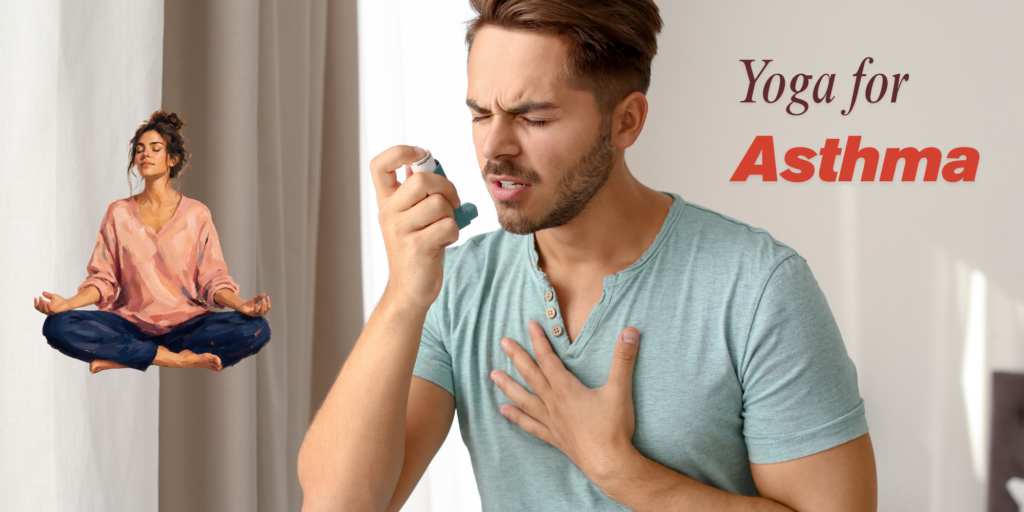
In Ayurvedic practice, asthma is often correlated with Shwasa Roga, a condition primarily triggered by an aggravation of Kapha and Vata doshas. This imbalance leads to the accumulation of thick mucus (Ama) and the constriction of the Pranavaha Srotas (respiratory channels), making breathing difficult and labored.
While Ayurvedic medicines and dietary changes are crucial for managing these doshas, Yoga and Pranayama (breath control) offer incredible complementary support. Specific asanas help expand the chest cavity and clear respiratory blockages, while targeted breathing exercises strengthen the lungs and calm the nervous system.
Here are 3 highly effective yoga techniques and breathing practices to naturally support lung health and manage asthma.
1. Bhujangasana (Cobra Pose)
-
How to practice: Lying on your stomach, plant your hands under your shoulders. Inhale, slide forward, and raise your chest up like a cobra. Keep your shoulders relaxed and take deep, slow breaths.
-
Practical Benefits: This pose is excellent for asthma because it deeply expands the chest, rib cage, and lungs. By opening the heart center, it improves blood and oxygen circulation throughout the respiratory system, helping to clear stagnant Kapha from the chest and relieve breathing difficulties.
2. Matsyasana (Fish Pose)
-
How to practice: Lie on your back with your legs extended. Place your hands under your hips, palms facing down. Inhale, press into your forearms, lift your chest and upper back off the floor, and gently tilt your head backward until the crown of your head rests lightly on the mat.
-
Practical Benefits: Known as the “destroyer of all diseases” in classical texts, the Fish Pose provides a profound stretch to the throat and chest muscles. This deep expansion encourages full, deep breaths and stretches the intercostal muscles between the ribs, significantly improving overall lung capacity and easing bronchial spasms.
3. Anulom Vilom Pranayama (Alternate Nostril Breathing)
-
How to practice: Sit comfortably with a straight spine. Use your right thumb to gently close your right nostril and inhale deeply through the left. Close the left nostril with your ring finger, release the right, and exhale. Inhale through the right, close it, and exhale through the left. Repeat this cycle for 5-10 minutes.
-
Practical Benefits: Anulom Vilom balances the sympathetic and parasympathetic nervous systems, calming the mind and creating a relaxed environment in the body where proper digestion and healing can take place. Because stress and anxiety are major triggers for asthma attacks, this soothing breathwork directly calms the mind, removes blockages in the nasal passages, and promotes smooth, unobstructed airflow.