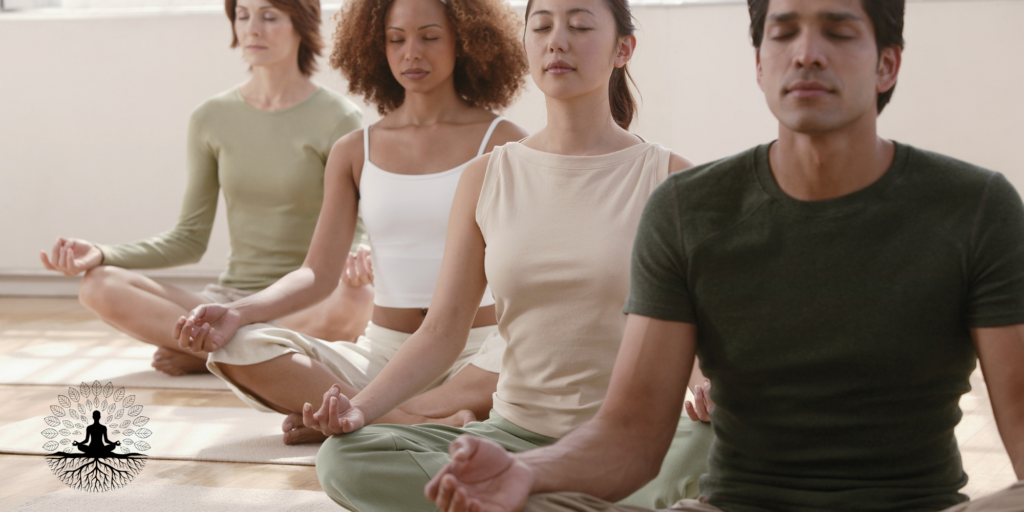
When most modern practitioners hear the word “yoga,” they immediately picture physical postures, stretching, and deep breathing on a rubber mat. However, in classical yogic philosophy—specifically as outlined by the sage Patanjali in the Yoga Sutras—the physical practice is merely one small fraction of a much more profound, comprehensive system.
This holistic system is known as Ashtanga Yoga. Translated from Sanskrit, “Ashta” means eight, and “Anga” means limb. Together, they form the “Eight-Limbed Path.” This path acts as a systematic guide to living a meaningful, purposeful, and deeply healthy life. Rather than just focusing on physical fitness, the eight limbs integrate moral and ethical conduct, self-discipline, physical health, and spiritual realization.
Here is a comprehensive breakdown of the 8 parts of yoga and how they work together to bring complete balance to the mind, body, and spirit.
1. Yama (Ethical Standards and Integrity)
The first limb focuses on our external behavior and how we conduct ourselves in the world. Yamas are universal moral commandments that help us navigate our relationships with others and our environment gracefully. There are five Yamas:
-
Ahimsa (Non-violence): Practicing compassion and abstaining from harming any living creature, including yourself, in thought, word, or action.
-
Satya (Truthfulness): Living truthfully and honestly, provided that the truth does not violate the principle of Ahimsa (non-violence).
-
Asteya (Non-stealing): Not taking what is not freely given. This extends beyond material possessions to include not stealing others’ time or energy.
-
Brahmacharya (Right use of energy): Traditionally referring to celibacy, in a modern context, it means directing your energy toward spiritual growth and avoiding the depletion of your vitality through excess.
-
Aparigraha (Non-attachment): Letting go of greed, possessiveness, and the urge to hoard physical or emotional baggage.
2. Niyama (Self-Discipline and Spiritual Observances)
While the Yamas govern how we interact with the outside world, the Niyamas direct our internal world. These are personal practices and habits that build character and cultivate a fertile ground for inner peace.
-
Saucha (Purity): Maintaining cleanliness of the body, mind, and environment. This includes eating pure foods and maintaining positive, clear thoughts.
-
Santosha (Contentment): Cultivating a deep sense of gratitude and peace with what you have and where you are in the present moment.
-
Tapas (Discipline): The fiery dedication, passion, and self-discipline required to maintain your practice and burn away impurities.
-
Svadhyaya (Self-study): The practice of introspection and studying sacred texts to better understand your true nature.
-
Ishvara Pranidhana (Surrender): Letting go of the ego and surrendering to a higher power, the universe, or the divine.
3. Asana (Physical Postures)
The third limb is the one most familiar in the West: the physical practice of yoga. Interestingly, in Patanjali’s original text, the primary purpose of Asana is not fitness. Instead, postures are designed to purify the body, build physical stamina, and clear energetic blockages so that the practitioner can sit comfortably in meditation for long periods without bodily distractions.
4. Pranayama (Breath Control)
“Prana” means life force or vital energy, and “Yama” means extension or control. Pranayama consists of specific breathing techniques designed to master the respiratory process. By controlling the breath, you can directly influence your nervous system, calm an anxious mind, and optimize the flow of energy throughout your entire body.
5. Pratyahara (Withdrawal of the Senses)
As we move into the fifth limb, the practice shifts from the external to the internal. Pratyahara is the conscious effort to draw our awareness away from the external world and outside stimuli. By shutting out the endless stream of sights, sounds, and physical sensations, we create a quiet internal space, setting the stage for deep concentration.
6. Dharana (Focused Concentration)
Once the senses are withdrawn (Pratyahara), the mind naturally slows down, allowing for Dharana. This limb involves binding your consciousness to a single point of focus. This could be the steady rhythm of your breath, a silent mantra, or a visual object like the flame of a candle. It is the training ground for true meditation, teaching the mind to stop wandering.
7. Dhyana (Meditation)
While Dharana is the act of concentrating, Dhyana is the uninterrupted state of concentration. In this seventh limb, the mind is entirely still and intensely aware, without focus on any specific object. It is a state of being rather than a state of doing, where the practitioner is completely immersed in meditation without any mental distractions.
8. Samadhi (State of Absorption / Bliss)
The final limb is the ultimate goal of Ashtanga Yoga. Samadhi is a state of ecstasy, enlightenment, and complete absorption with the divine or the universe. In this state, the illusion of separation dissolves. The meditator, the act of meditation, and the object of meditation merge into one singular, profound experience of peace and interconnectedness.







)
&description=&image=https://vaidyaclub.com/wp-content/uploads/2019/05/ashtang_yoga_eight_parts_of_yoga-1024x512.png)